
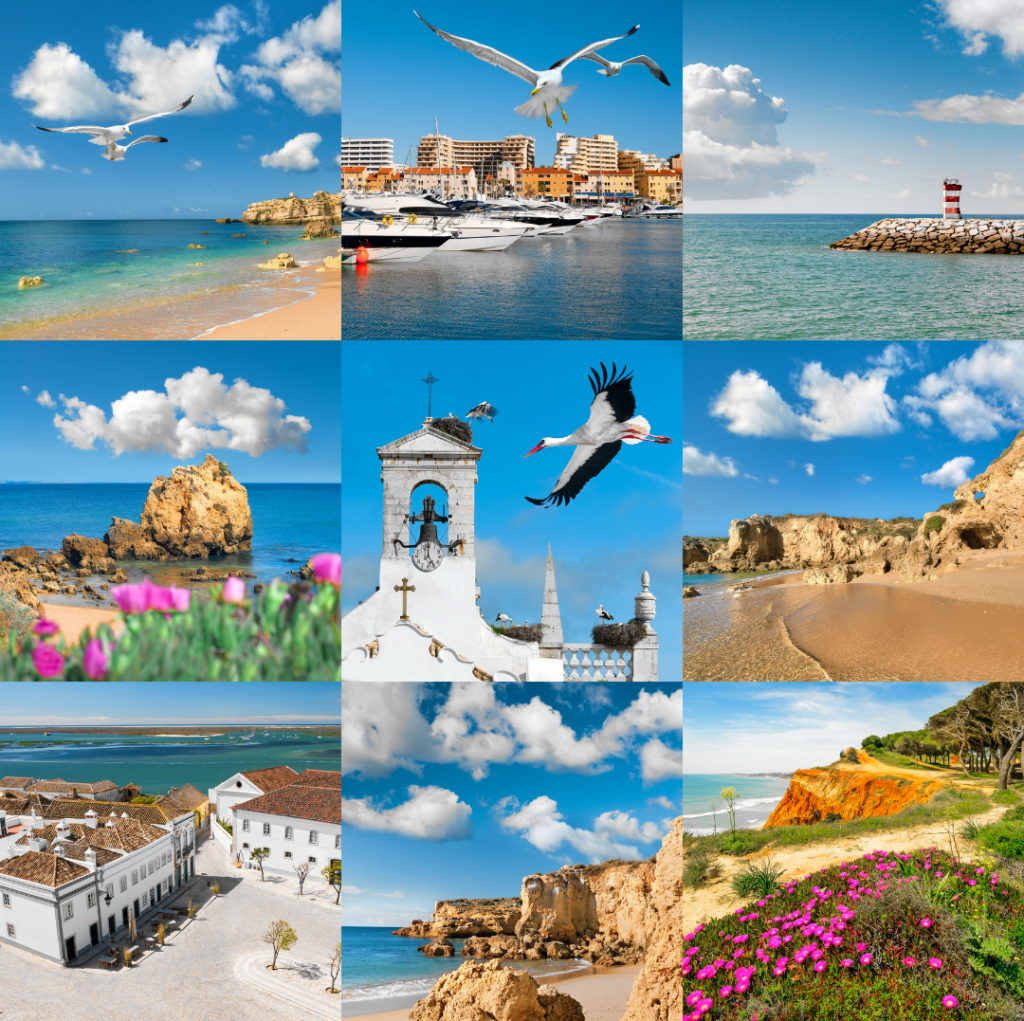
Portugal is often associated with summer. For many people, the first images that come to mind are beaches, outdoor dining and long days near the coast.
Living in Portugal year-round gives you the chance to see how the country changes across spring, summer, autumn and winter. The weather shifts, different regions become more appealing, local events change, and seasonal food appears in markets and restaurants.
For people considering Portuguese residency, this is one of the practical advantages of having a base in the country. Instead of trying to experience Portugal during one short summer trip, you can return at different times of year and choose the regions and activities that make the most sense for each season.
What is Portugal like throughout the year?
Portugal has a generally mild climate, but conditions vary significantly by region.
The north is usually cooler and wetter than the south. Inland areas tend to have hotter summers and colder winters than coastal areas. Lisbon, Porto, the Algarve, the Alentejo, Madeira and the Azores can all have noticeably different weather at the same time of year.
This makes Portugal well-suited to year-round living. During hotter periods, coastal and northern areas can be more comfortable. In cooler months, cities, wine regions, inland towns and the islands can offer a different type of experience.
There is no single version of the Portuguese climate, and there is no single best season to spend time in the country.
Spring in Portugal: mild weather and easier travel
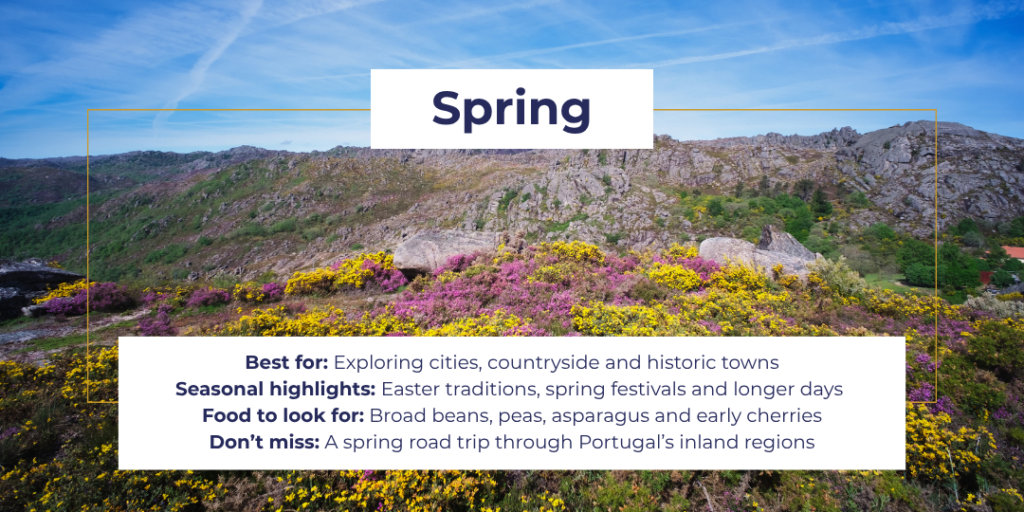
Spring is one of the most practical times to explore Portugal. Temperatures are generally mild, the days are getting longer, and many places are less crowded than they will be in July and August.
It is a good season for visiting cities, walking in the countryside and travelling through inland regions that can become very hot later in the year. Restaurant terraces are used more regularly, local festivals return to the calendar, and seasonal produce begins appearing in markets and on menus.
In northern and central Portugal, the landscape becomes greener after the wetter winter months. Almond blossom is a seasonal attraction in parts of northeastern Portugal, while the Fundão area is known for its cherry blossom and later spring cherry season.
Spring also includes several important religious and local events. Easter is marked by processions, church services and family meals, although traditions vary between regions. The annual pilgrimage to Fátima on May 13 is another major event in the national calendar.
Seasonal food becomes lighter and more focused on fresh produce. Broad beans, peas, asparagus and early fruit become more common. In the Alentejo, wild asparagus is often used in simple dishes with eggs, bread, olive oil and local herbs.
For residents, spring offers a useful window for travelling around Portugal before the busiest and hottest part of the year. It is often possible to combine city visits, coastal trips and countryside travel without having to plan around extreme heat or peak-season crowds.
Summer in Portugal: beaches, festivals and outdoor life
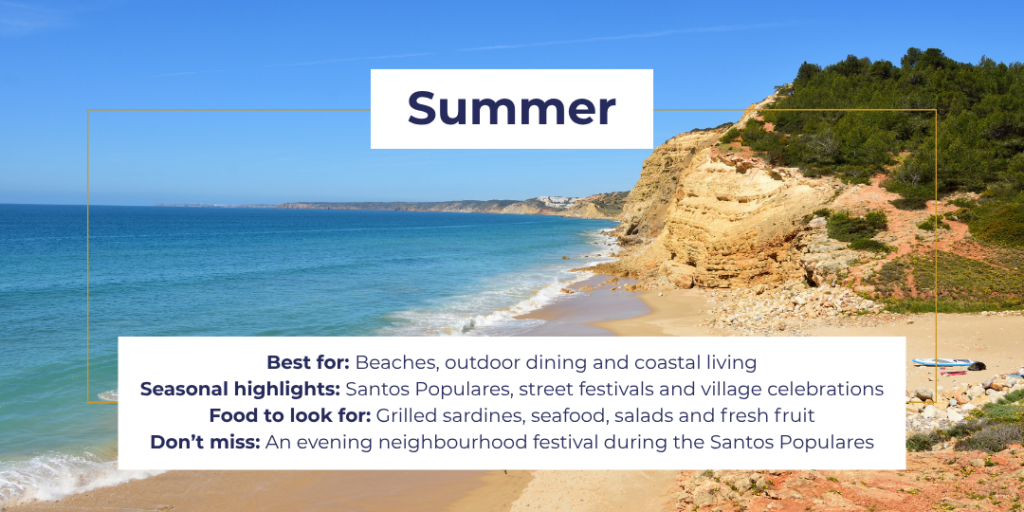
In summer, much of daily life shifts outside, particularly in coastal towns and cities.
Beaches, cafés, promenades and outdoor restaurants become busier. This is especially noticeable in the Algarve, around Lisbon, along the Silver Coast and in northern coastal towns.
Portugal’s summer appeal is not limited to the ocean. River beaches and inland swimming areas are popular in central and northern regions, particularly near mountain areas and historic villages.
June is one of the busiest months for local festivals. Lisbon celebrates Santo António, Porto celebrates São João, and towns across the country hold street parties, processions, neighbourhood dinners and live music events.
These celebrations are part of local life and are often organised around neighbourhoods, parishes or town traditions. Smaller festivals continue throughout the summer, including religious events, music festivals, food fairs and village celebrations.
Summer food is generally simple and suited to warmer weather. Grilled sardines are closely linked to the June festivals, while grilled fish, seafood, salads and fruit appear more often on menus. In the Alentejo, cold soups are common during periods of high heat.
Summer can also be challenging inland. Temperatures in the Alentejo and parts of central Portugal can become very high. People living in Portugal have more flexibility to adjust their plans by spending time near the coast, travelling north, or planning activities for earlier in the morning and later in the evening.
Autumn in Portugal: wine regions and seasonal food
September often still feels like summer in much of Portugal, especially in the south and around Lisbon. Beaches remain active, outdoor dining continues, and the sea is often warmer than it was earlier in the season.
As autumn continues, temperatures begin to fall and inland regions become more comfortable to visit.
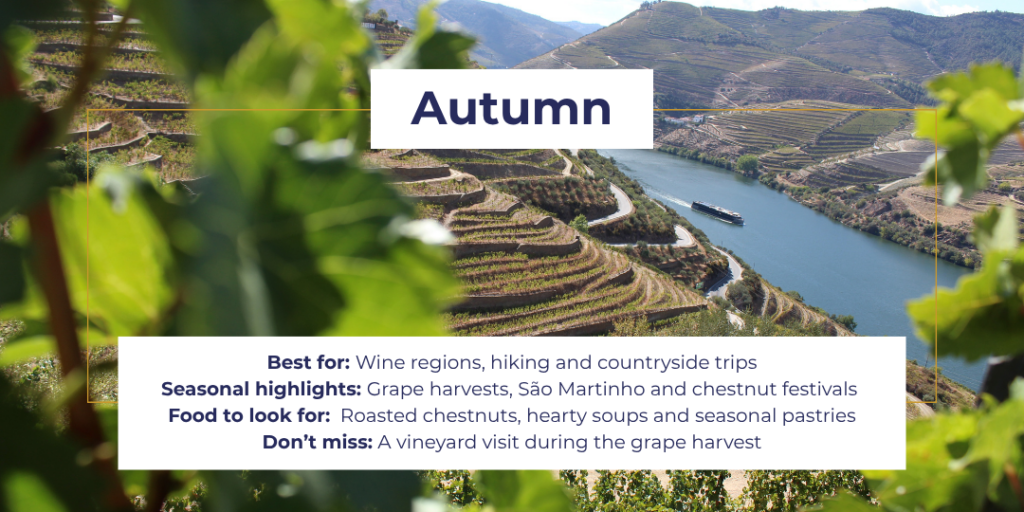
The grape harvest, known as the vindima, takes place across Portugal’s main wine regions. The timing varies depending on the region, the grape variety and the weather, but the harvest is a major part of early autumn in the Douro, Alentejo, Dão and Vinho Verde regions.
This is also one of the best times to visit wine-producing areas. Vineyards are active, many estates offer harvest-related experiences, and the landscape begins to change colour later in the season.
Autumn food includes roasted chestnuts, hearty soups and seasonal pastries. Chestnuts become especially common in late autumn and are strongly associated with São Martinho on November 11.
Many towns and villages hold magustos, informal gatherings where chestnuts are roasted and served with new wine or água-pé. These events vary in size, but they remain a familiar part of autumn in many parts of Portugal.
The cooler weather also makes autumn suitable for hiking, cycling, golf and visiting historic towns. Coastal areas are usually quieter than they were in summer, while wine regions and inland destinations become more appealing.
For people living in Portugal year-round, autumn is a useful time to explore parts of the country that can be uncomfortably hot during July and August.
Winter in Portugal: quieter travel and regional variety
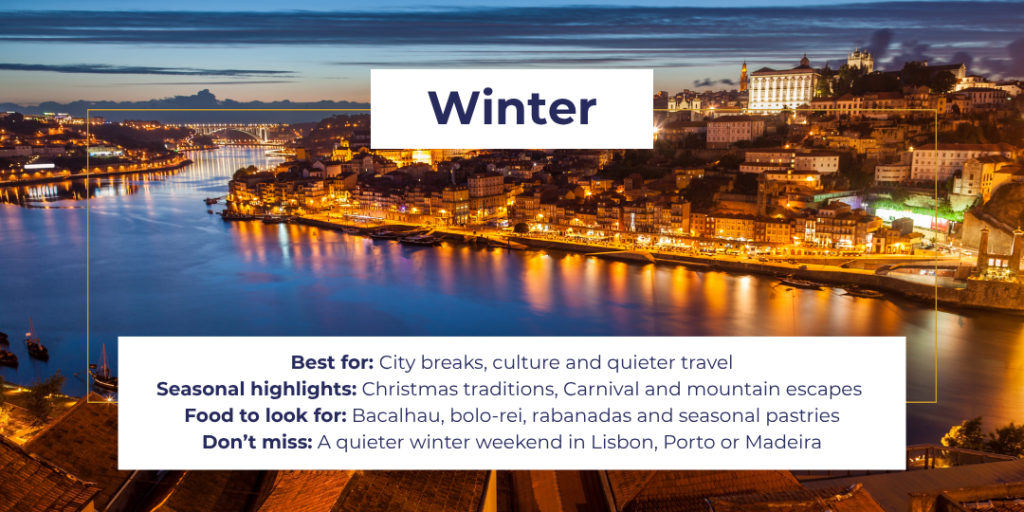
Winter in Portugal is usually milder than in many parts of the United States and northern Europe, but the country does not have year-round summer weather.
There are rainy periods, colder evenings and significant regional differences. Porto and northern Portugal are generally wetter. Inland areas can have frost and low overnight temperatures, while Serra da Estrela can receive snow.
The Algarve, Madeira and parts of the Lisbon region are usually milder. Walking, golf and outdoor activities remain possible on many winter days, although conditions are less predictable than in summer.
Winter is also a practical time to visit Lisbon and Porto. The cities are generally quieter outside Christmas and New Year, while museums, restaurants, galleries and cultural venues remain open.
Popular day-trip destinations can also be easier to visit because there are fewer tourists and less traffic than during the peak summer months.
Christmas is widely celebrated with lights, markets, concerts and family meals. Traditional foods include bacalhau on Christmas Eve, along with bolo-rei, sonhos, rabanadas and other seasonal desserts.
January and February are quieter, but there are still events across the country. Carnival is celebrated in several towns and cities, with some locations known for large parades and local traditions.
Why a Portuguese residency base changes the experience
Visiting Portugal and having a base in Portugal are different experiences.
A vacation usually focuses on major attractions, good weather and a limited number of locations. A residency base gives you more flexibility to return throughout the year and spend time in the country without treating every visit as a sightseeing trip.
This might mean spending spring in Lisbon, part of the summer near the coast, autumn in the Douro and a winter break in Madeira.
It can also be much simpler. Returning to the same neighbourhood regularly allows you to become familiar with local markets, restaurants, events and daily routines over time.
Portuguese residency does not mean someone needs to spend every week of the year in Portugal. The value is having the option to use the country as a consistent European base rather than a destination reserved for occasional summer travel.
Portugal’s size also makes it relatively easy to move between regions. Lisbon and Porto provide access to nearby coastlines, historic towns and natural areas, while domestic flights connect the mainland with Madeira and the Azores.
This flexibility makes it easier to experience Portugal according to the season rather than expecting one location to offer the same experience all year.
Portugal is more than a summer destination
There is no single best season for living in Portugal.
The main benefit of living in Portugal year-round is flexibility. You can choose where to spend time based on the weather, local events and the type of experience you are looking for.
For people considering Portuguese residency, this can be one of the most practical lifestyle benefits: Portugal becomes somewhere to return to throughout the year, rather than somewhere visited only during summer.
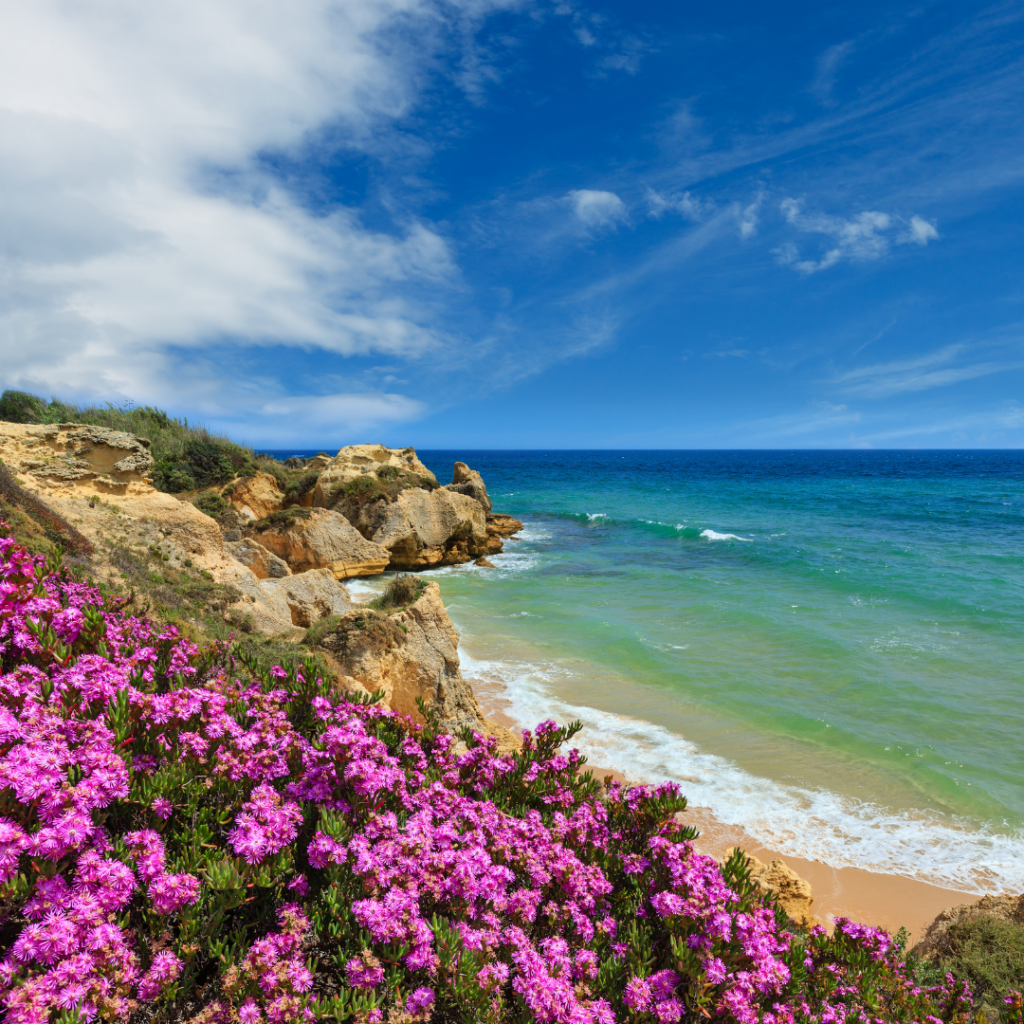
How the Portugal Golden Visa Fund Route Fits In
Through a qualifying €500,000+ investment in one of the four Optimize Portugal Golden Opportunities sub-funds, eligible U.S. investors can pursue Portuguese residency while also gaining exposure to a professionally managed, euro-denominated Portuguese investment fund.
For many investors, this route offers a way to pursue residency while taking time to explore where in the country they may eventually want to spend more time. Some families want the ability to spend more time in Europe. Others are thinking about retirement, travel, international diversification, or options for the next generation.
To learn more about how the Optimize Portugal Golden Opportunities Fund can support your Portugal Golden Visa strategy, visit the fund page or contact the Optimize team by Email or Phone to discuss the next steps.